 Peptide Log
· 3 min read
What to write in an injection log, with a simple template
The details worth recording for every injection, why each one helps, and how to keep a log going without it becoming a chore.
An injection log answers questions memory cannot: Did I take it this week? Where did it go last time? Which vial was that from? Kept well, it takes a few seconds per injection and saves a lot of second-guessing.
The essentials for every injection
These are the details worth writing down every time.
- Date and time. The actual time you injected, not the time it was planned.
- The medicine, as named on the label. If you use more than one, this keeps entries apart.
- The dose, exactly as prescribed, with its unit. Write the dose in the unit on your prescription or label, such as mg or mL, rather than converting it in your head. If a conversion is involved, write both and check them against the label.
- The injection site. The area and the section, for example "thigh, right outer". This is what makes site rotation possible.
- The vial or pen it came from. Note the lot number and expiry date when you start a new one. Recall notices usually name specific lot numbers, so this lets you check quickly whether a notice affects you.
Worth adding when it applies
- How you felt. Any symptoms you and your clinician agreed to watch, and when they started.
- Anything unusual at the site, such as redness, swelling or a lump that does not settle.
- Weight, if you are tracking it, written at the same time of day each time so the entries compare fairly.
- Missed or late doses, and what you did about them, following your leaflet's instructions.
A simple template
If you keep a paper or spreadsheet log, one line per injection is enough:
- Date and time: 17 Nov 2026, 19:30
- Medicine: as on the label
- Dose: as prescribed, with its unit
- Site: abdomen, lower left
- Vial or pen: lot number, opened on 10 Nov 2026
- Notes: anything you noticed
Tips that keep a log going
- Log straight after the injection. Later turns into never, or into guessing.
- Keep the log where your supplies are, or on your phone, so it is always to hand.
- Use the same words every time, for example the same names for the same sites. Consistent entries are easier to scan.
- Record only what you need. A log you can keep up is worth more than a detailed one you abandon.
- Bring it to appointments. The US Food and Drug Administration suggests keeping a list of your medicines and sharing it with your doctors and pharmacists at visits. A dated injection log does the same job for injected medicines.
Keep it private
An injection log is health information. Keep a paper log somewhere private, and protect your phone with a screen lock if you keep it there.
How Peptide Log helps
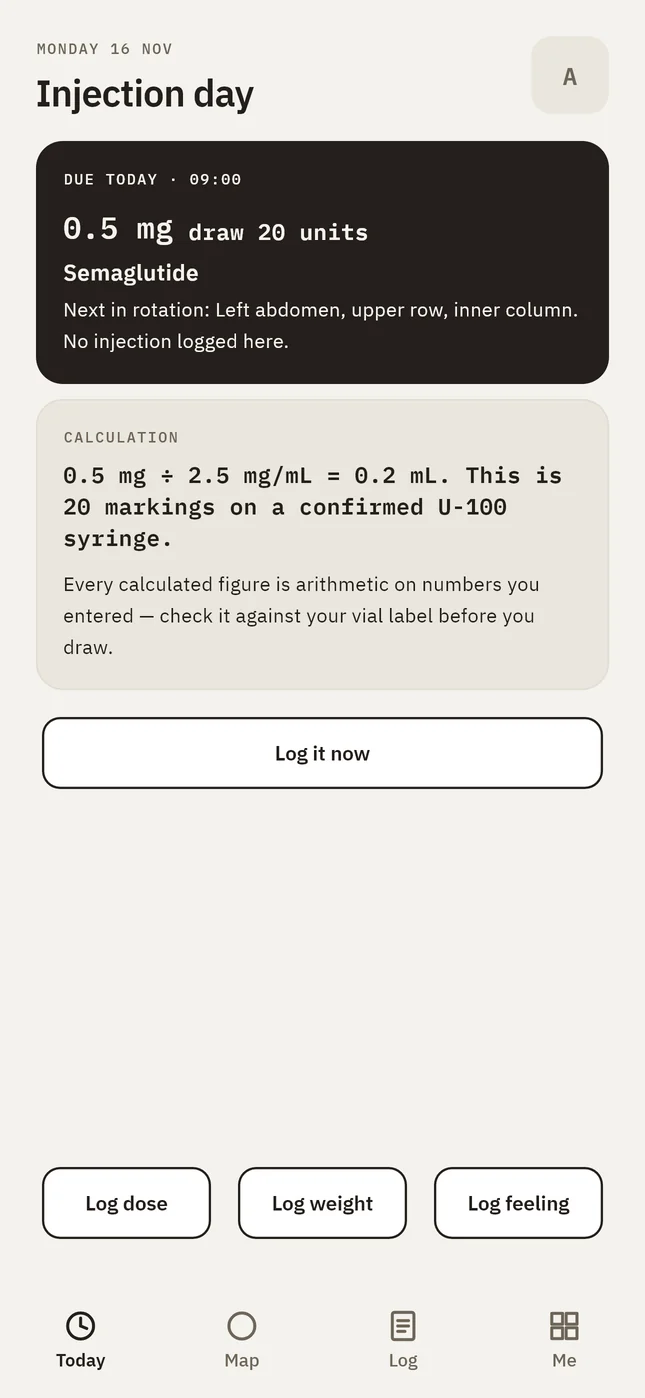
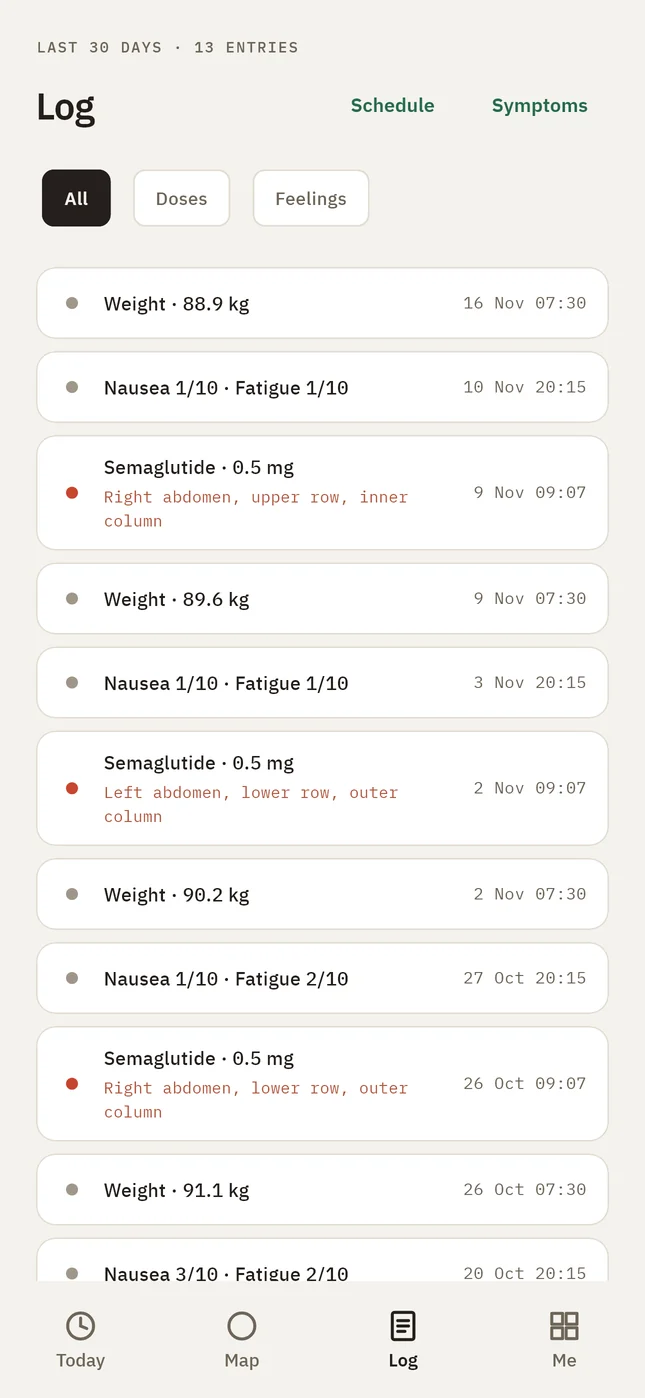
Peptide Log is built for exactly this. After your first entry, the next one starts from it, with the same vial and dose, so you only change what is different. The site is picked on a body map, the vial is linked to its record, and you can check in on the symptoms you chose to track and log your weight in the same place. Your log stays on your phone and is left out of cloud backups.
Sources
- Create and Keep a Medication List for Your Health, US Food and Drug Administration
General information
This article is general information to help you keep good records. It is not medical advice and does not replace your prescriber, your pharmacist or the leaflet that comes with your medicine. If something feels wrong in your body, contact a clinician. In an emergency, call your local emergency number.